The Lewis and Clark National Historic Trail
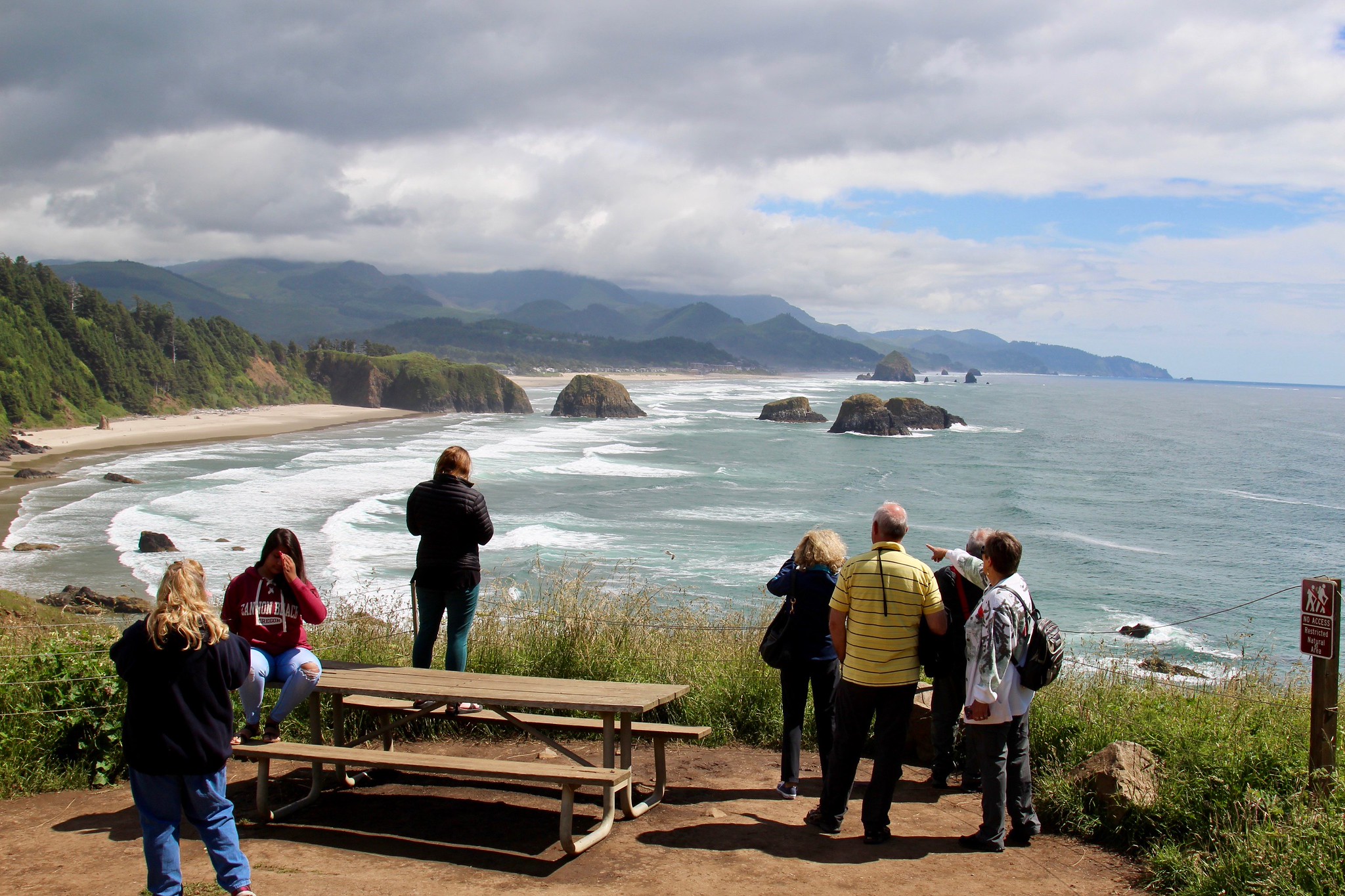
Ecola State Park (photo David Fulmer FLICKR
America’s 250th birthday, the Semi-quincentennial, will be celebrated on July 4, 2026, marking the 250th anniversary of the Declaration of Independence.
As we mark 250 years of American history. For those planning trips this summer, several state parks and national trails (in Oregon and beyond) stand out for their connections to exploration, westward expansion, Native peoples’ history, military history, and early settlement. Let’s travel to two National Historic Trails that call for summer exploration.
One of the oldest routes is The Lewis and Clark National Historic Trail that winds nearly 4,900 miles through the homelands of more than 60 Tribal nations as it follows the historic routes of the Lewis and Clark Expedition of 1803-1806 to the Pacific Ocean extending from Pittsburgh to the mouth of the Columbia River, near present day Astoria, Oregon.
In1803, U.S. Pres. Thomas Jefferson sent a message to Congress asking for $2,500 to send an officer and a dozen soldiers to explore the Missouri River, make diplomatic contact with Indians, expand the American fur trade, and locate the Northwest Passage (the much-sought-after hypothetical northwestern water route to the Pacific Ocean).
Meriwether Lewis and William Clark were U.S. Army officers who led the famed Corps of Discovery (1804–1806), including vital members like Sacagawea and York. Tasked by President Thomas Jefferson, they led the first major overland expedition to explore and map the newly acquired western territories all the way to the Pacific Ocean. The Trail connects 16 states and many tribal lands, making for a great adventure this summer or any summer.
It is administered by the National Park Service.
Ecola State Park State near Seaside
Besides its dramatic coastline, Ecola State Park marks locations visited by the Lewis and Clark Expedition during the winter of 1805–1806. Interpretive signs explain how the explorers interacted with Native people and survived on the Pacific Coast. Wrapping around Tillamook Head, between Seaside and Cannon Beach, Ecola State Park stretches along 9 miles of coastline and offers outstanding sightseeing and recreation opportunities combined with a storied past.
Lewis & Clark National Historical Park, Fort Clatsop, Astoria OR
Fort Clatsop commemorates the 1805-06 winter encampment of the 33- member Lewis and Clark Expedition. A 1955 community-built replica of the explorers’ 50’x50′ Fort Clatsop is the focus of the park. The fort, historic canoe landing, and spring are nestled in the coastal forests and wetlands of the Coast Range as it merges with the Columbia River Estuary. The park is located approximately 5 miles south of Astoria, Oregon.
Fort Stevens State Park, near Astoria
Named for a frontier military fort, this park helps tell the story of settlement, military expansion, and changing relations between the U.S. government and the native nations during the nineteenth century. Fort Stevens marks the site of a military installation once used to guard the mouth of the Columbia River. The fort saw service for 84 years, from the Civil War to World War II.
The Oregon Trail
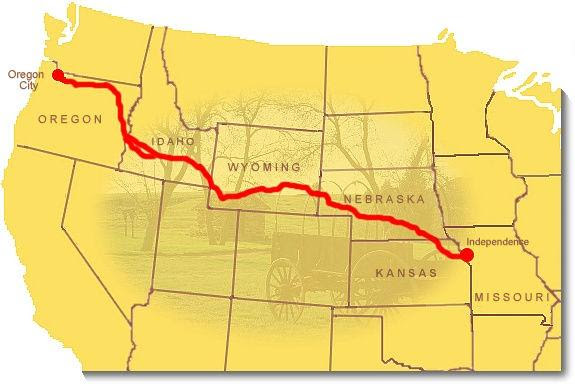
The Oregon Trail was a 19th-century overland route that connected the Missouri River to the valleys of Oregon. Spanning roughly 2,000 miles, it was a critical pathway for westward expansion of the United States, enabling hundreds of thousands of emigrants to settle in the Pacific Northwest between the 1840s and 1860s. Between 1843 and 1869, an estimated 300,000–400,000 emigrants used the Oregon Trail seeking farmland, trade, and opportunity. The route became central to the concept of Manifest Destiny, symbolizing national ambition and frontier hardship. It also led to profound impacts on Indigenous peoples, whose lands were traversed and disrupted. More information at National Parks Service.
Key facts
- Length: About 2,000 miles (3,200 km)
- Active migration period: 1840s–1869
- Starting points: Independence, St. Joseph, and Council Bluffs, Missouri area
- Endpoints: Willamette Valley and Oregon City, Oregon
If your main interest is the Oregon Trail, these Oregon sites are especially worthwhile:
The National Historic Oregon Trail Interpretive Center, located near Baker City, Oregon, brings to life the historic journey of pioneers who traveled westward on the Oregon Trail in the 19th century. This interactive museum and outdoor site illustrate the challenges, triumphs, and profound impact of this historic migration that shaped the American west. Visitors can explore exhibits that showcase the daily lives of pioneers. The exhibits also highlight the cultural connections and collisions of the Native Americans and Euro-American emigrants involved in this monumental movement of people. Map
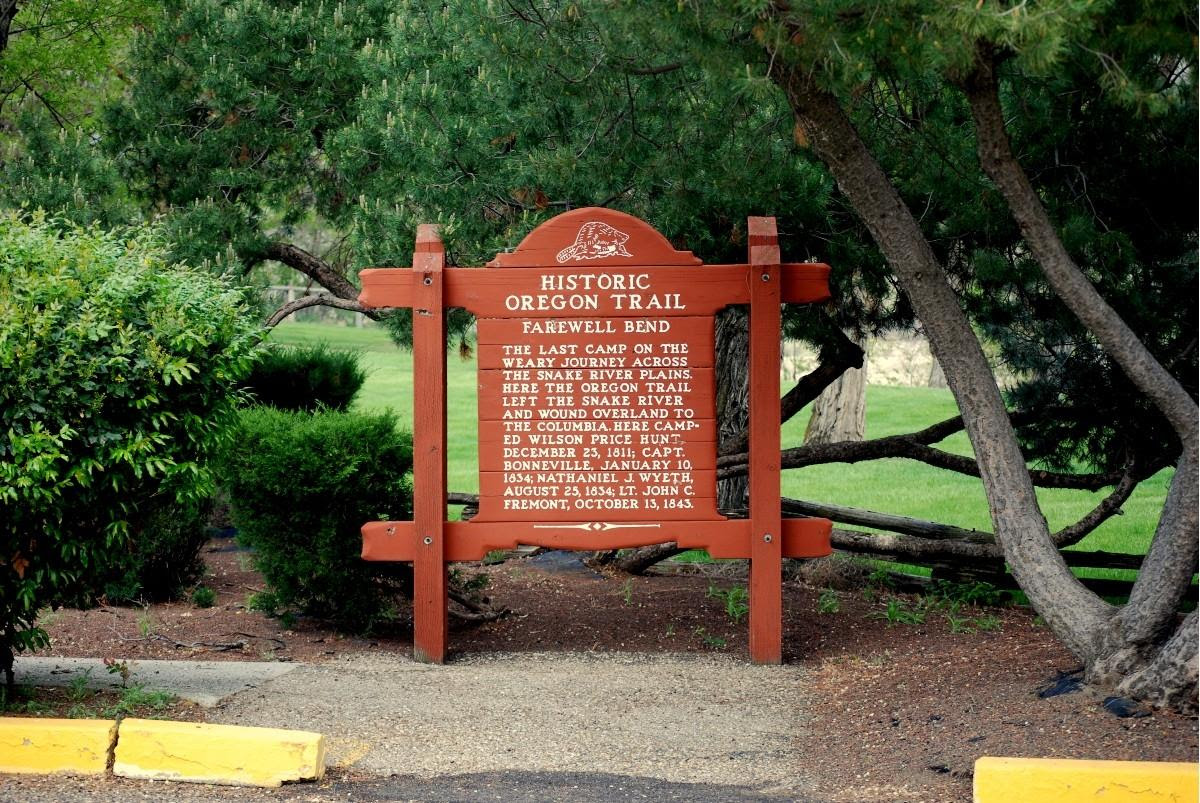
Farewell Bend State Recreation Area, near Ontario, Oregon, features a desert experience on the banks of the Snake River’s Brownlee Reservoir. Historic markers and interpretive displays provide visitors with information. Farewell Bend served as a pivotal resting point on the Oregon Trail where pioneers left the Snake River after following it for 330 miles. Exhausted pioneers used this vital oasis to rest and stock up on supplies before embarking on the arduous, mountainous trek across the Mountains. More information
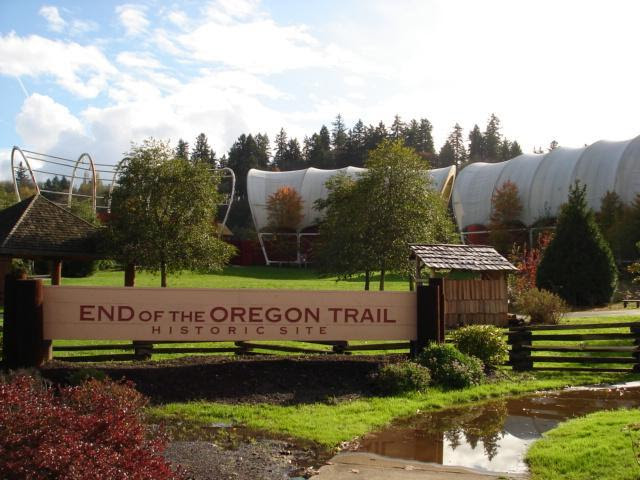
End of the Oregon Trail Interpretive Center
Several Oregon Trail landmarks are preserved in state parks and historic sites across the West. Travelers interested in westward expansion should visit locations along the trail where emigrants crossed rivers, camped, and recorded their experiences on the journey to Oregon.
The trail began near the Missouri River, crossing the Great Plains, the Rocky Mountains, and the Snake and Columbia rivers before reaching Oregon. Major waypoints included Fort Kearny, Chimney Rock, Fort Laramie, South Pass, and Fort Boise. Travelers faced difficult terrain, river crossings, and limited resources along the journey. Travelers faced disease, accidents, and environmental hazards more than conflict. Cholera was among the deadliest threats. The completion of the transcontinental railroad in 1869 ended large wagon migrations, but the Oregon Trail remains an enduring symbol of American pioneering spirit. Portions of the trail are preserved today as the Oregon National Historic Trail under the National Park Service.
IYKYK: A Classic Game
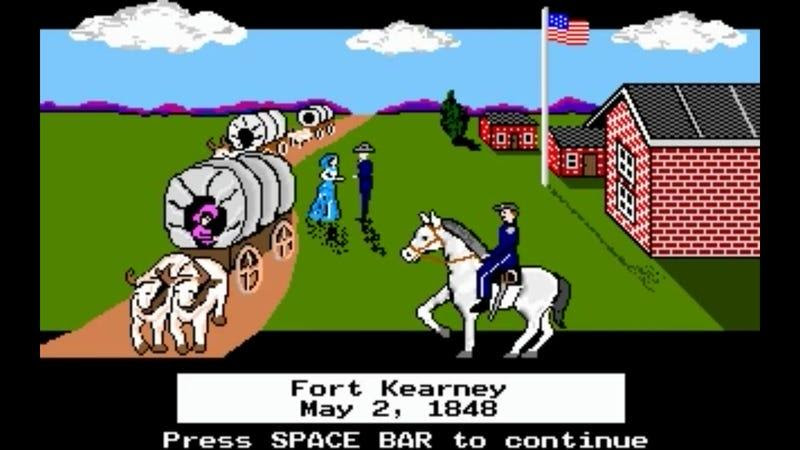
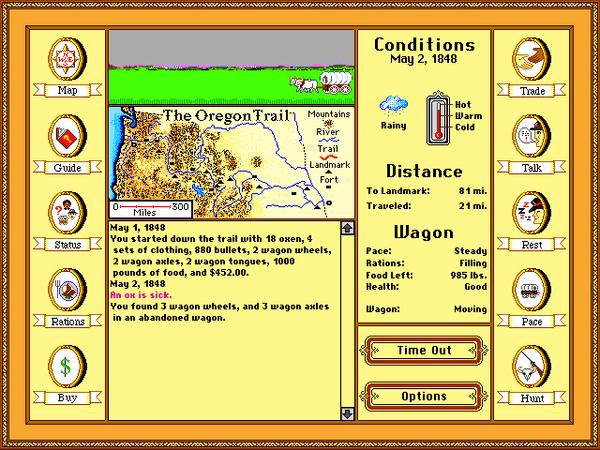
If you can’t make the trip in real life, The Oregon Trail is a classic educational computer game that lets players experience the challenges of traveling west across the United States in the 1840s. Originally created in 1971 by teachers in Minnesota, the game became one of the most popular educational programs ever used in American schools The game is famous for the many hazards that the pioneers faced. Players may encounter illness, injuries, bad weather, broken wagons, and food shortages. One of the most memorable features is the possibility of travelers dying from diseases such as dysentery, which became a well-known phrase among generations of students.
In the game, players lead a wagon party from Independence, MO to Oregon City. Before starting, players choose supplies such as food, clothing, ammunition, and spare wagon parts. Along the journey, they must manage resources carefully while making decisions about travel speed, rest stops, and river crossings. Modern versions of the game continue to be released, but the original remains a beloved part of American gaming and educational history.